

We Need to Talk About Heated Rivalry and Why Straight Women Love It So Much

Of course, I watched Heated Rivalry. Who am I to go agains the zeitgeist?
As of this moment, the show is rated 9.0 on IMDB (when I started writing this, the rating was 9.1). Just for reference, rating of The Sopranos, arguably one of the best shows of all time, is 9.2. Pretty good, don’t you think?
Anyway, some very mild spoilers ahead.
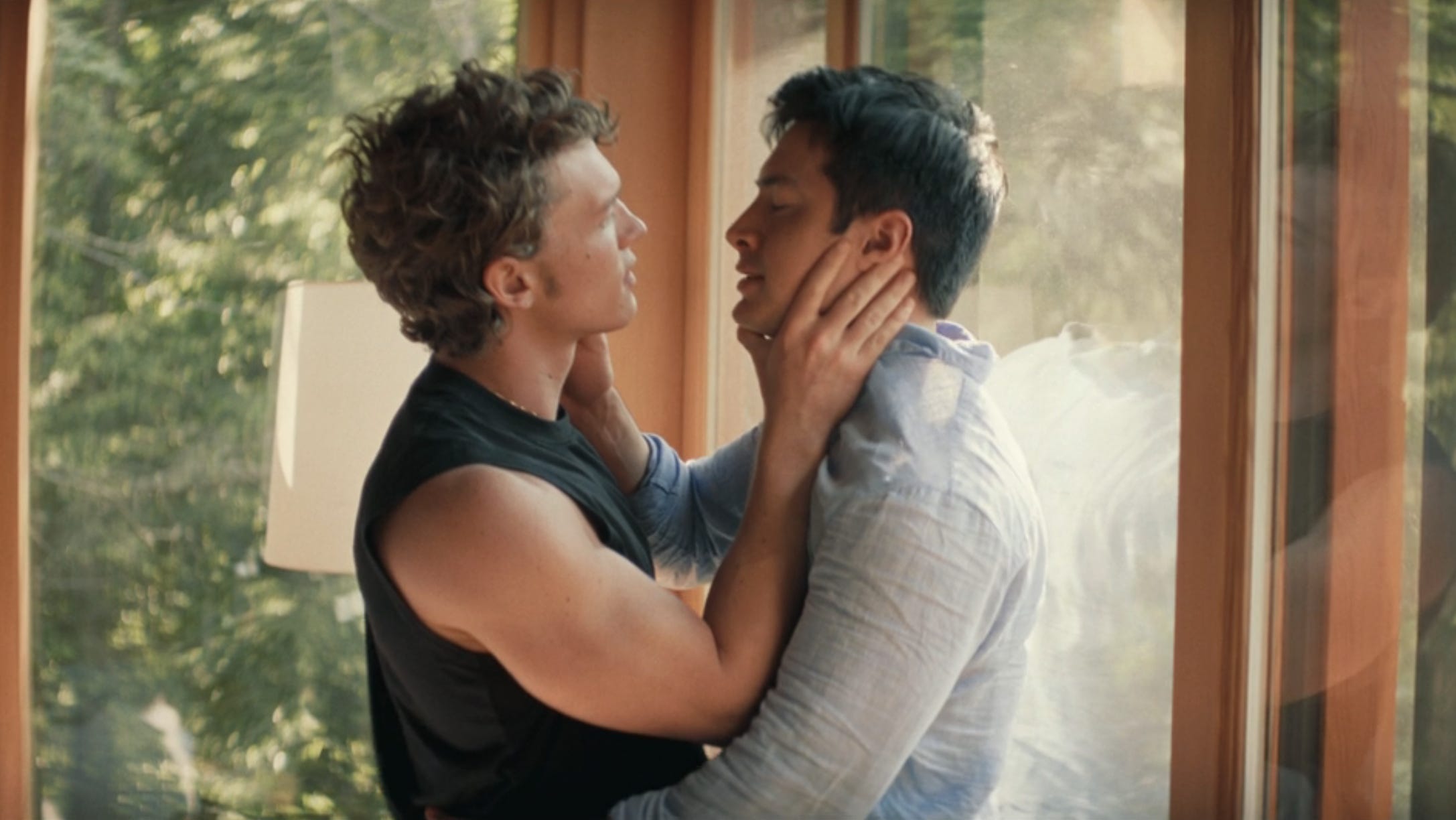
Heated Rivalry is a hockey romance (based on a novel by Rachel Reid) between two NHL superstars: Shane Hollander, golden-boy Canadian sweetheart, and Ilya Rozanov, the Russian provocateur who becomes his greatest rival on the ice. They are opponents in every way the sport encourages them to be: national identity, media narrative, fan culture, team loyalty. Their rivalry is profitable and public. But at its heart, the story, of course, isn’t about rivals. It’s about two men falling in love and learning what love is.
Julia Carrie Wong wrote in the Guardian: Straight women, queer women, cisgender women, trans women; young and old, single and coupled, Canadian, American and increasingly every other nationality – they’re all going feral for the love story between Shane and Ilya.
I’m part of that swarm too. I binged the show in a day (which if you know me doesn’t mean that much, I do watch shows incredibly fast) and liked it. Then I rewatched it (again, if you know me, doesn’t mean much) and loved it. I missed so much in the first watch.
My whole feed is Heated Rivalry: a lot of gay men talking about the show and and an obscene amount of straight women. I started to wonder why.
It’s would to dismiss the popularity of the show among heterosexual women as a trend, simply something about hot guys1 (and they are HOT), but I feel like a story that so many women don’t just enjoy, but emotionally latch onto deserves a more detailed analysis.
So here we go.
It’s romance without the gender roles women are tired of
Straight romance on screen often comes bundled with exhausting dynamics: the man who won’t communicate, the woman who “fixes” him, jealousy that masquerades as love, or a female character shrinking her needs to keep the peace. The woman changes her life so the relationship can work is a pretty common trop.
Heated Rivalry removes that framework entirely. Shane and Ilya can’t fall back on traditional heterosexual scripts where one person becomes the caretaker and the other becomes the emotionally unavailable hero. They are both strong, both terrified, both stubborn, both needy.
It feels not only refreshing, but weirdly healing.
It’s intimate without being threatening
The attraction is intense, but it doesn’t come with the same cultural fear many women have learned through experience. Some of Ilya’s persona probably could read as misogynistic if Shane were a woman. But because both leads are closeted men—and Ilya is a queer Russian athlete—we don’t have to process him through that constant “is this nonconforming man a threat?” lens. We know he isn’t.
It’s a relationship where both people are “the love interest”
Most straight romances still treat the man as the one with the arc: the mysterious one, the powerful one, the one who needs to be understood. The woman is often positioned as audience surrogate, emotional labourer, or reward.
In Heated Rivalry, both Shane and Ilya are framed as desirable. Both are centred. Both are complicated. Both get to be dramatic. Both get to be vulnerable.
It’s a safe place to enjoy male softness
There’s a kind of emotional starvation many women experience when it comes to men. Not because men don’t have feelings, of course, they do, but because many men have been trained not to show them, or worse—to show them only as anger, distance, or silence.
This show nurtures male vulnerability. It makes men ache for each other, long for each other, get jealous and scared, apologise, change, admit they need someone. And they do it without the story mocking them for it. The show treats male tenderness seriously.
The desire is undeniably mutual
I am tired of romances where the woman has to convince the man to want her. Even in “happy endings,” the emotional work is uneven: she waits, she hopes, she proves she’s worth choosing. I am still pissed at Sex and the City. But you will be moving to Paris for yourself??? I get why they end up together, it would be crazy after so many years of our emotional involvement for them not to, but no, come on.
Here the hunger is mutual from the beginning. Shane and Ilya don’t warm up to each other the way male characters in straight romances often do. They are drawn together again and again like gravity. That mutual obsession is thrilling.
It’s a forbidden romance that’s about fear, not morality
Forbidden love stories often revolve around cheating, betrayal, or a woman being punished for wanting too much. The “forbidden” part often becomes a moral lecture.
But here, the forbidden element is structural: the league, the media, the expectations, the closet. The story isn’t saying the love is wrong. It’s saying the world makes it hard.
We still get all the tension of secrecy, risk, and longing.
It gives the emotional high of obsession plus the comfort of romance plus excellent banter
This show has the pacing of addiction: the stolen moments, the repeated reunions, the constant pull. It taps into something melodramatic and delicious, the idea of a relationship so intense it becomes its own universe.
But it also delivers romance fundamentals we all love: great banter, rivals-to-lovers tension, longing across years, “no one understands me like you do” energy, devotion that grows into something inevitable.
It scratches the itch of a classic romance, but with sharper stakes and better chemistry.
The show is passionate and not degrading, to all parties involved
A huge amount of media about love is basically women suffering beautifully. Straight romance often includes humiliation arcs, women chasing emotionally unavailable men, women being “too much,” “too needy,” “too emotional,” women being punished for having standards.
Here women aren’t required to watch a female lead be degraded, doubted, threatened, or forced to shrink herself into something lovable. The emotional pain belongs to the couple, and the couple is evenly matched. Both men are extremely successful, horny and, ultimately, in love.
It’s not that women want to watch men instead of women. It’s that women want to watch love without the tired cultural script that says a woman must suffer in one way or another to deserve it.
We get to watch desire without female objectification
Women like sexy stories. But many straight romances confuse sexy with objectifying or framing female pleasure as secondary.
Heated Rivalry flips the gaze. It lingers on male bodies, male beauty, male yearning. It eroticises men in a way that often isn’t offered to women. It lets us experience desire as something fun, powerful, and guilt-free.
I never watched gay porn, I don’t think it would do anything for me, but I immensely enjoyed every single sex scene of Heated Rivalry.
I am not a gay man. I am not even a gay woman, so I can’t comment on the appropriation of male objectification, but in a TikTok about Heated Rivalry, Griffin Maxwell Brooks, a gay, non-binary influencer, commented: “When people are like, ‘Oh, they’re fetishizing gay men,’ I’m like, ‘Girl, if anything they’re fetishizing men who are not abusing women, and I think we can’t be mad at that.’
It’s an excellent piece of media
At a certain point, the explanation doesn’t need to be psychological or sociological. It’s simply genuinely good television. It’s well-paced, beautifully-shot (I am obsessed with Valentina Vee’s analysis of the cinematography), emotionally gripping, and addictive in the way only great romance dramas are. The show knows exactly how to build tension and reward it, how to stretch a glance into a threat, a joke into intimacy, and a fight into a confession. The chemistry is hot, it’s story-driving. It’s romantic, it’s sharp. It’s intense without being ridiculous, dramatic without being empty, and tender without being cheesy.
I don’t have a proper source but I saw the number $12 million CAD being thrown around. If that’s truly the budget, that makes it so much more impressive. It’s a lot of money, of course, but not for Hollywood.
That’s it. Thanks for coming to my TED Talk!
Okay, I off to read the books.
The Cut wrote today “The Night Manager works because Tom Hiddleston is hot.” Haha. They are not wrong.
Yes! Yes! Yes! What an amazing show and a beautiful summary of what makes it so.
It is absolutely beautiful, but not in the way you think!
The unifying beauty of it follows: Forever, until recently, men have held firm the lock on “creep”. On pervert. We dominate this space. It is so ubiquitous with (hetero) man that we almost get to define it, since nearly every man at some point has found himself close to its label. A pervert, plainly, is someone who desires a body that would never desire them back, because to that body they are not even a conceivable object of attraction.
https://medium.com/@ipsteak/why-we-must-never-cancel-heated-rivalry-675c3fbdd528